Machu Picchu’s Sacred Rock is one of the most enigmatic and spiritually significant archaeological features in Peru. An impressive stone monolith, it is a moving reminder of the close spiritual communion of the Inca civilisation with the natural world. The monolith stands on the northern side of the historic citadel, where the rich slopes rise to the base of Huayna Picchu. The holy site is carved from a large natural outcrop of granite and shaped to match the precise profile of the mountain peaks behind. Visitors are invited to travel back in time and witness the ancient rites of the Andes.
The Sacred Rock lies in the agricultural and northern part of Machu Picchu, Cusco Region, southern Peru. It is located at an altitude of more than 2,400 meters above the sea level. Two low stone altars flanked the site, behind which lay an amphitheatre of cloud forests hidden by mist. Inca priests used to do ceremonies, offerings and astronomic alignments. Moving away from the more populated central plazas, the landscape here offers a quiet, contemplative experience for visitors to intimately experience ancient Andean stonework and mountain worship.
Highlights and Cultural Attractions
The Granite Monolith. A huge natural rock, skilfully carved by the Inca masons to resemble the outline of the next mountain range.
Sacred ritual altars Two low, flat stone platforms in front of the monolith where offerings were traditionally made to the mountain gods (Apus).
The Trail Gateway: This is the northernmost trailhead and checkpoint for hikers beginning the steep ascent to the summit of Huayna Picchu.
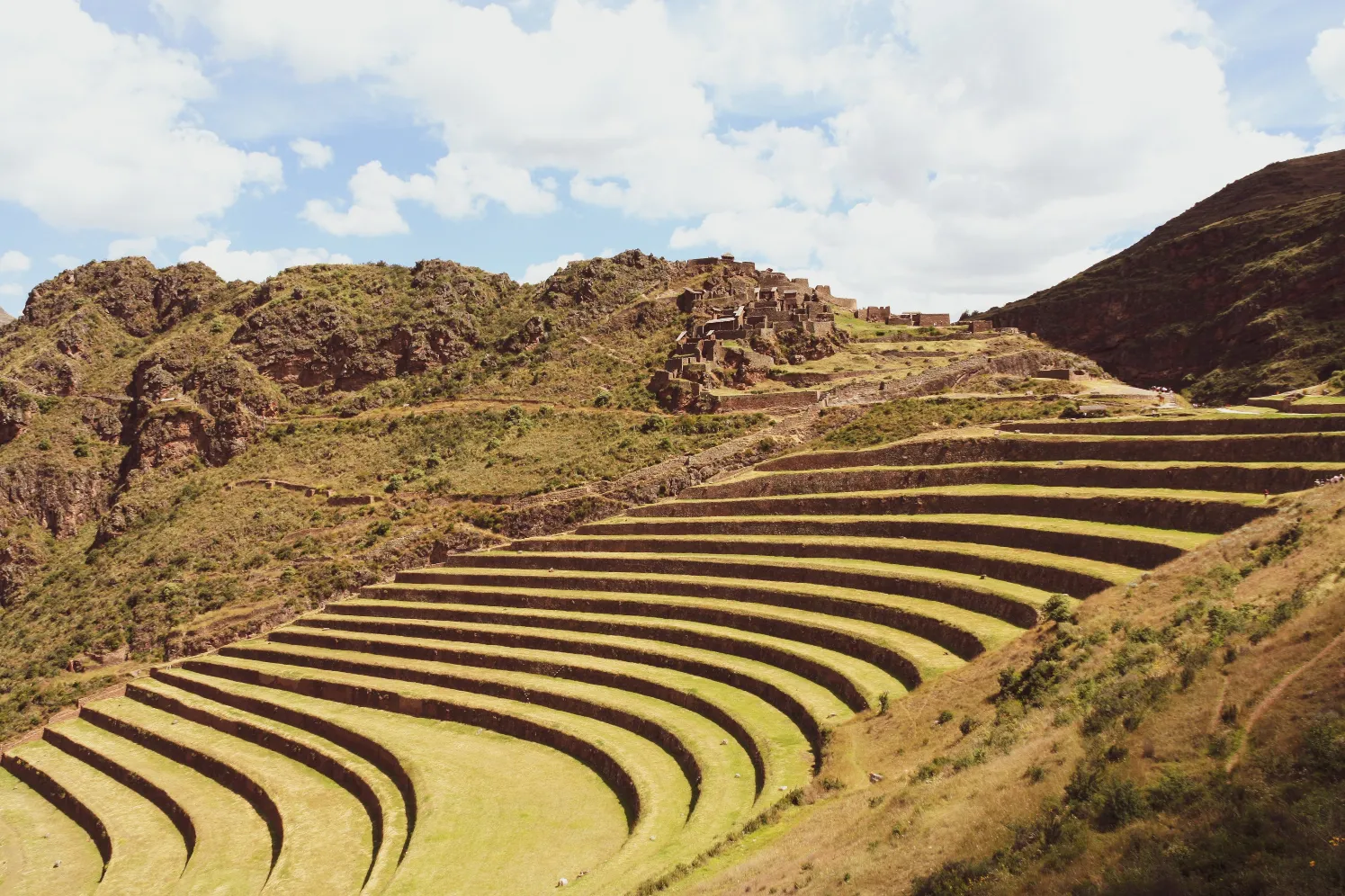
Andean Mountain Backdrop: Set in panoramic views of the majestic green mountains, native cloud forests and terraced hillsides across the Urubamba river valley.
Visitor Info Getting Here When to Go
Getting there: Or you can take the scenic train from Cusco or Ollantaytambo to Aguas Calientes, take a shuttle bus to the main gates of Machu Picchu and walk through the northern sector to the site.
Best Time to Visit The dry season, from May through September, offers the most reliable weather, with clear mountain skies and ideal lighting for photographing and exploring the ruins.
Visitor Tips Please avoid walking on the fragile stone surfaces and keep your voice low within this preserved ritual area. Pair your visit with a walk up nearby Huayna Picchu.
Nearby Places to Visit
Huayna Picchu Peak: The tall vertical mountain directly behind Sacred Rock, known for its staircases cut into the cliffs and ruins at the summit.
Temple of the Sun, a stonework building of unique curved shape in the urban sector. Dedicated to the sun worship and observation of celestial bodies.
Intihuatana Stone Large carved ritual stone on a hilltop terrace which served as a solar marker and astronomical clock.
What to Know Before You Go
What Is The Sacred Rock Of Machu Picchu?
A huge, hand-carved granite monolith like the mountain peaks surrounding it that the Incas used for sacred ceremonies.
What is the Holy Rock in Holy Sanctuary?
It is located at the northern end of the citadel of Machu Picchu, at the very start of the path that goes up to Huayna Picchu.
Is it permissible for people to touch the Holy Rock?
The stone is ancient itself. The park rules do not allow touching or leaning against the monument to protect the monument from erosion and from oils.
Discover the everlasting wonders of the Inca Empire and its spiritual center. Create Your Own Peru Holiday With Skanda Holidays Now!